

Rat Exterminator in Montreal
Rat Identification, Treatment and Extermination
Established in Montreal since 1972, we offer specialized services such as pest management and the extermination of rats or mice. Our unidentified vehicles move in the greater Montreal metropolitan area.
Rat extermination: why should you worry?
It is imperative to work with a rat exterminator if you are a homeowner. As a tenant, you must notify the owner of the building as soon as a grouop of rats (als called mischief) or any other small rodents are detected.. Rats reproduce very quickly. In fact, a rat can have more than 100 young in a single year! Rats are dangerous because they are potential carriers of diseases such as parasitic meningitis and the plague. Generally speaking, rats take advantage of opportunities to infiltrate buildings when sewer pipes are severely damaged. They will then take shelter in the walls and in the plumbing. They will then take shelter in the walls and in the plumbing.
Therefore, call in a rat exterminator. After analyzing the situation and the dangers in the form of an interview with the customer, we will certainly proceed to a smoke test intended to identify sewer breaks.
The two rat species in Quebec:
the Norway rat and the Black Rat
In Montreal, the rat population consists mainly of two species: the Norway rat and the black rat.
Norway rats in Montreal
(brown rat, gray rat, dock rat)

Characteristics of Norway Rats (Gray Rats)
- Body length : 39-50 cm
- Weight : 240-450 grams
- Colour : Gray-brown on back, light gray belly.
- Reproduction: Year-round
- Litters per year : 5
- Number of young : 8-10
- Lifespan : 1 year
Norway rats are rodents that have spread throughout North America. If you have seen a rat in Montreal, it was most likely a Norway rat.
The Norway rat (also known as the brown rat, sewer rat, or gray rat) is a small rodent with gray-brown fur. It prefers damp places, sewers, cellars, and basements. This species of rat is the most common in the greater Montreal, Laval, Longueuil, and North Shore areas, but can also be found all over Quebec. If you see a rat, it is probably this species. Damp conditions provide them with an ideal habitat for nesting and accessing water. They are social animals that reproduce quickly.
They are highly adaptable and can thrive in a variety of environments, but they are particularly attracted to places with high humidity and limited human disturbance. They are most commonly found in sewers, basements, and underground infrastructure such as parking garages and subway stations.
Black rats in Montreal
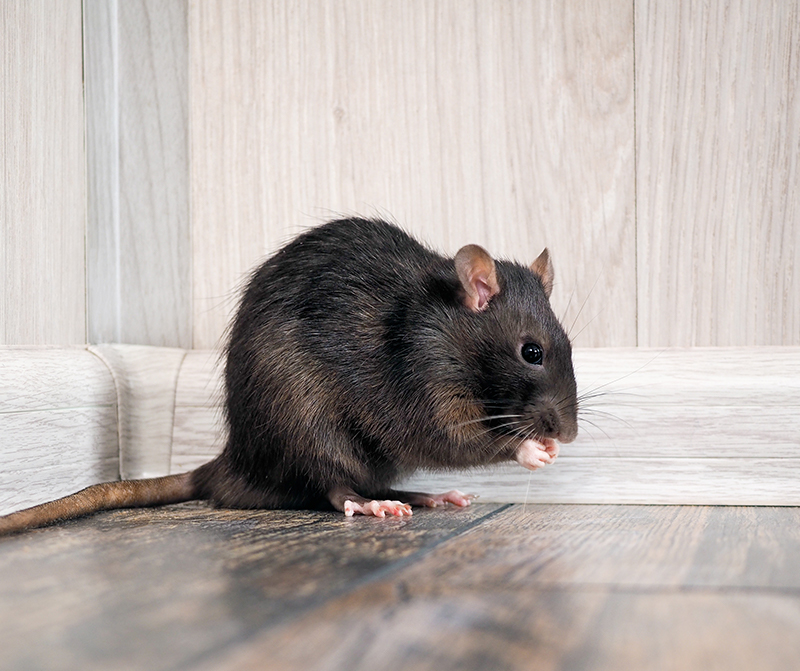
Characteristics of Norway Rats (Gray Rats)
- Body length : 39-50 cm
- Weight : 240-450 grams
- Colour : Gray-brown on back, light gray belly.
- Reproduction: Year-round
- Litters per year : 5
- Number of young : 8-10
- Lifespan : 1 year
Black rats are the new arrivals in Montreal. Introduced to Quebec and North America via maritime transport, they are the most common type of rat in the vicinity of the Port of Montreal. This species is now present throughout Montreal.
Unlike its larger and more widespread cousin, the black rat prefers high places. It can be found in trees and on the upper floors of buildings.

Rat Diet in Montreal
An adult rat consumes 15 g of food and drinks 15 ml of water per day. It feeds on garbage, debris, your pets’ food, food that has been left unattended, and the contents of pantries.
It takes everything in its path. He is particularly fond of meat, grains and cereal products. The rat is a tireless rodent. In addition to stealing your food, they will eat away at anything in its path and block the way behind it. Rats can therefore cause significant damage to structures and equipment. In nature, they damage fruit trees and crops, whether they consume them or not. For all these reasons, it is important to call in a rat exterminator.

Reproduction cycle
Rats reproduce very quickly. They can have dozens of children every year. Les bébés atteignent rapidement leur maturité sexuelle, particulièrement les femelles, qui peuvent avoir plusieurs portées par année.
When you start to seeing evidence of rats in your home or shop, it is highly likely that a colony has already taken up residence established nearby. A certified rat exterminator will then need to carry out a rat treatment.

Diseases transmitted by rats
It infects food with its feces and can transmit several diseases to humans. Rats are dangerous because they are potential carriers of diseases such as parasitic meningitis and the plague. In some cases, they can be fatal. For example, the rat can be a carrier of plague or rabies.
Differentiating between rats, mice, and field mice
The rodents you have spotted in your home or on your property may be difficult to identify. Rays, field mice, and mice all look alike, and their treatments by an exterminator are all different.
Let’s start with the differences between rats and mice. Grey mice and common rats typically have similar coats: both the common rat and the common mouse have gray fur and long tails. The difference between them is their size: while mice are 7 to 10 centimeters long, adult rats are much larger, measuring 20 to 30 centimeters in length. Mice also have more pronounced ears.
Differentiating between field mice and house mice is more difficult. Field mice and house mice are similar in overall size, but field mice have shorter tails. One visual cue is that a house mouse’s tail is as long as its body, while field mice have tails that are shorter than their bodies. However, differentiating rats from mice and field mice is relatively easy: if the rodent couldn’t find in the palm of your hand, it is most likely a rat. Rats are just much bigger than the others.
If you have questions or cannot identify the rodent that has taken up residence in your home, call a mouse exterminator to help you tell the difference.

Field Mouse
Similar in size to the mouse, but with a shorter tail.

Grey Rat
Bigger, with smaller ears and shorter tail.

Grey Mouse
Notice the larger ears and the smaller size
What attracts rats to buildings?
When winter arrives, rodents will try to find shelter in a warmer place, and may therefore try to get into your home. In addition to their need for warmth, which becomes more acute at the beginning of fall, mice are attracted to the food that humans consume. Pantries with unsealed products are easy targets for small rodents. Rats are attracted to the food that humans consume. Pantries with unsealed products are easy targets for rodents.
In general, rats enter through doors, windows, garages, small openings in the house, such as dryer vents, and cracks in walls.
If you detect the presence of rats (by noticing noises at night or spotting their droppings), it is very important to call in a rat exterminator, as they reproduce very quickly. For a complete and clean extermination, it is essential to call in a rat exterminator.
Prevention tips for rat problems
If your neighborhood is infested with rats, it is best to take precautions. The best way to stop a rat infestation before it starts is to make sure your building or house is properly sealed.
- Ensure that your doors, windows, and pipes are properly installed and free of cracks.
- Clean your closets, pantries and your kitchen to avoid having easily accessible food and crumbs.
- Clean out cupboards, pantries, and the kitchen to avoid leaving food accessible.
- Avoid accumulating household waste
- Place your plants in locations that are not easily accessible (such as hanging them on walls)
How to get rid of rats?
Mechanical rat traps
Everyone is familiar with rat traps. These simple devices consist of bait and a mechanism that traps or kills the rodent. These traps are placed in areas where rats are known to travel. They can also be placed near areas where food is available to maximize the chances of catching a rat.
We also offer modern rat traps, which ensure that vermin are trapped without being killed immediately.

Rat poison (rodenticides)
Rodenticides are toxic products typically poisoned bait. Rats will naturally spread rodenticides throughout your home, which can also eliminate a large part of their colony.
These toxic products must be used with extreme caution. Children and pets are particularly vulnerable and may require hospitalization if they handle these products. We do not recommend the use of rodenticides in situations where children could accidentally handle the product.
The most powerful and toxic poisons can only be used by certified pest control technicians. Exterminateurs Associés is also certified to sell powerful rodenticides that are not available in supermarkets. Discover our specialized extermination products here.

An intervention from a rat exterminator
Despite this, we do not recommend that you try to exterminate rats on your own. The use of products and traps by the inhabitants of the infested building is typically unsuccessful and rarely eliminates the problem in the long term. Yes, you will kill rats, but you cannot easily get rid of all of the rats in the colony established in your structure.
Rats make their nests outside of the infested buildings, typically choosing to live in sewers. The infested buildings, like restaurants, grocery stores and apartment buildings, are not the source of the infestation, but are instead simply part of a wider “hunting” territory of a colony. A rat extermination might occur in several buildings simultaneously.
A certified mouse exterminator such as Exterminateurs Associés can identify the problematic nest, use the right products, and employ the right methods to carry out a sustainable mouse extermination.

Calling a rat exterminator is essential to ensure the job is done properly.
Calling a rat exterminator is essential to ensure the job is done properly.
There are reportedly over 6 million rats in Montreal! This means you could potentially be affected by this problem. If you think you have detected the presence of rodents, do not hesitate to contact the specialists of Exterminateurs Associés. We act with discretion, in a professional manner and are fully accredited.
Certified exterminators backed by our guarantee
Calling on your rat exterminator is essential to ensure that the job is done properly and using the right method to solve your problem.
During our visit, we identify and clearly explain the extent of the damage or foreseeable problems so that you can take preventive measures. Once you have accepted our recommendations, we begin the appropriate treatment and rat extermination process based on your specific situation.
When performing our work, we use only commercial-grade products that are not available to the public. With these services, you can rest assured that you are doing everything possible to ensure that a rat problem or infestation never happens again.
If you think you have detected the presence of rodents, don’t hesitate to contact our specialists at Exterminateurs Associés. We work discreetly, professionally, and are fully accredited. We act with discretion, in a professional manner and are fully accredited.